Loading...
Serving Frederick, MD and surrounding areas. (240) 971-0250
Cracked, tilting, or spalling front steps are a safety hazard and a curb appeal problem. We build concrete steps in Frederick that stay level, grip well in winter weather, and hold up for decades - with permits pulled and inspections passed.
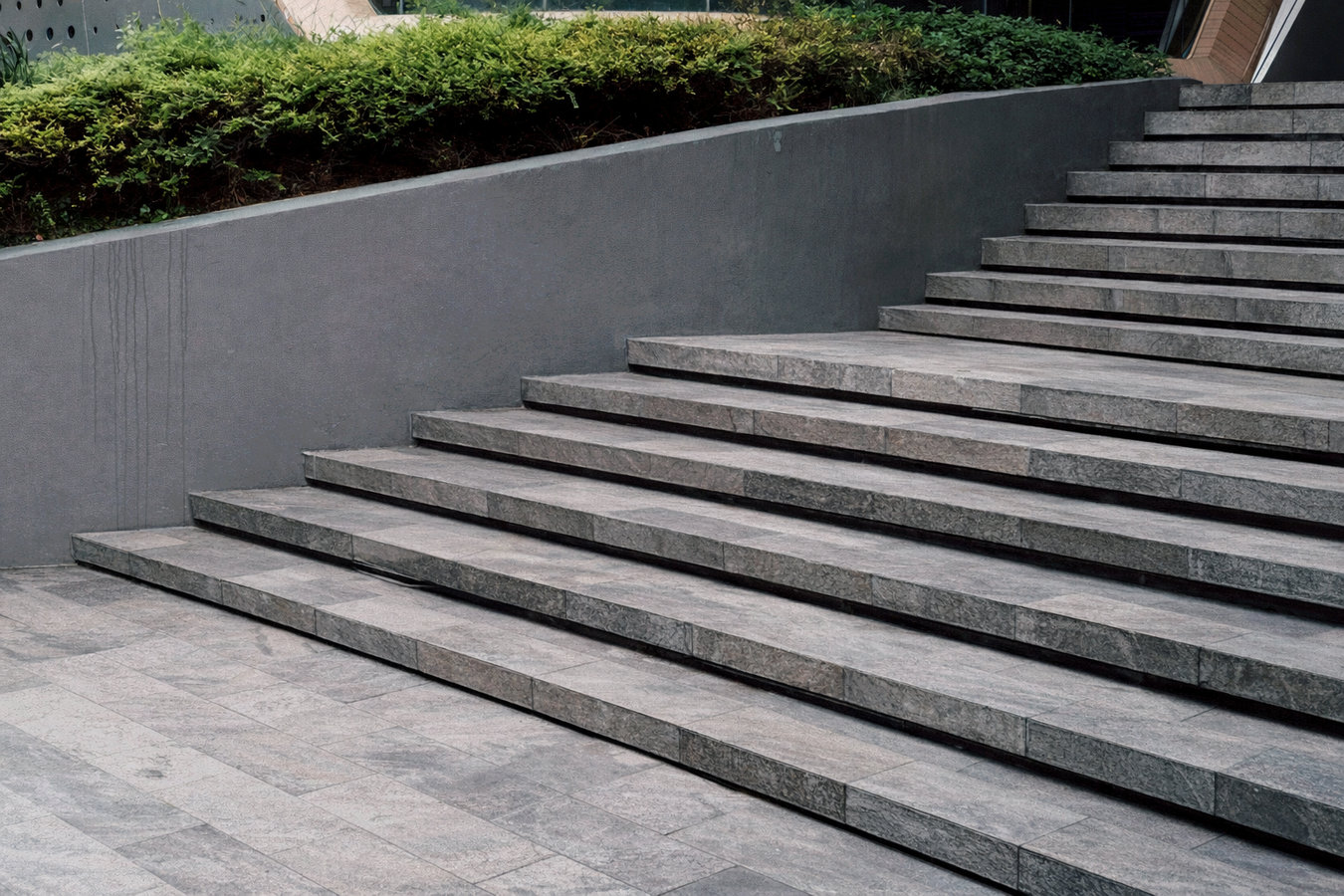
Concrete steps construction in Frederick covers demolition of old steps, base preparation, forming, pouring, and finishing - most residential projects take one to two days of active work, with a 24 to 48-hour wait before light foot traffic and about a week before normal use.
The part that determines how long your steps last is what happens before the concrete is poured. Frederick's clay-heavy soils shift with moisture, and steps built without adequate footings or a compacted base will tilt and crack within a few years. If your project also involves work at the foundation level, our slab foundation building service handles that structural work before we form and pour the steps on top.
Maryland state law requires contractors performing residential improvements above a certain threshold to hold a valid license through the Maryland Home Improvement Commission. Verifying that license before you hire is one of the simplest protections available to any homeowner.
Cracks wider than a hairline - especially ones that go all the way through the edge of a step - mean structural integrity is already compromised. In Frederick's climate, those cracks will grow every winter as water gets in, freezes, and forces them wider. Once cracking is widespread, replacement is the more cost-effective long-term choice.
If any step wobbles when you stand on it, or the whole staircase has visibly tilted away from the house, the base underneath has shifted. This is especially common in older Frederick neighborhoods where original steps were poured without deep footings in clay-heavy soil. A tilted step is also a trip hazard that should not wait.
Spalling is when the top layer of concrete starts to flake off in chunks, leaving a rough, pitted surface underneath. It is a direct result of freeze-thaw damage and is very common on steps that are 20 or more years old in this region. Once spalling starts, it accelerates - the exposed interior absorbs even more water and damage spreads faster each winter.
If a gap is opening up between the back of your steps and your home's wall, the steps are pulling away from the structure. This gap lets water run directly down against your foundation, which can create bigger problems over time. It also signals that the steps may no longer be properly supported.
We handle full replacement of existing steps, new construction where no steps currently exist, and optional decorative finishes including stamped patterns and exposed aggregate. Every job starts with a written estimate that itemizes demolition, forming, the pour, finishing, permit fees, and cleanup - so the number you agree to at the start is the number you pay at the end. If you want a railing, we form the anchor points into the concrete during the pour, which is far easier than drilling them in later. Our concrete sidewalk building service pairs naturally with a steps project for a connected, uniform front entrance.
For homes in Frederick's historic district, we are familiar with the city's preservation guidelines and can work within finish and material requirements that apply to older properties. We also serve commercial properties in Frederick County that need exterior staircase work rebuilt to current code.
Best for steps that are cracked, tilting, or spalling - where the existing base has failed and resurfacing is not a lasting fix.
For homes being upgraded from wooden or block steps to a permanent concrete staircase with proper drainage.
For homeowners who want stamped, colored, or exposed aggregate steps that improve curb appeal alongside the entrance.
A large share of Frederick's residential neighborhoods - particularly in and around the historic district and older subdivisions west of downtown - were built in the 1940s through 1970s. Steps from that era were often poured without the reinforcing steel or drainage slopes that modern work requires. If your home is more than 40 years old, there is a good chance your steps are approaching the end of their useful life even if they look intact from the outside. Frederick winters accelerate this: temperatures drop below freezing and climb back up dozens of times between December and March, and that constant movement is what causes spalling and cracking in older concrete.
Spring and fall are the best seasons to pour in Frederick - roughly April through May and September through October - because extreme summer heat and near-freezing winter temperatures both create problems for curing concrete. We work throughout the region, including Westminster and Eldersburg, where the same soil and climate conditions shape every project.
We respond within 1 business day to schedule a free on-site visit. Step projects are hard to price from a photo alone, so we walk the site before giving you a written quote that breaks out demolition, materials, labor, and permit fees separately.
For most new step installations in Frederick, we apply for a building permit before scheduling your project. This typically takes a few business days to a couple of weeks. We handle all the paperwork - you just need to know the permit timeline affects your start date.
We break out and remove your old steps, dig and prepare the base, then build the wooden forms that define the shape and size of your new steps. This is the loudest and dustiest part of the job - most of the heavy work happens in the morning.
We pour, level, and apply a broom finish for grip. After at least 24 to 48 hours of curing, we schedule the permit inspection and walk the finished steps with you. We explain the sealing schedule before we leave.
Free written estimate. We pull the permit. No obligation and no surprise invoices.
(240) 971-0250We pull every required permit through Frederick City or Frederick County before work starts. Your steps get inspected and documented - fully legal, fully protected, and on record when you sell your home.
We use concrete mixes and penetrating sealers suited to this climate. Frederick's winters put steps through dozens of freeze-thaw cycles every year - the right mix and proper sealing are what separate a deck that lasts a decade from one that starts crumbling in three years.
Frederick County's clay-heavy soils shift with moisture. We dig footings deep enough and use a gravel base to reduce movement risk - the detail that keeps steps level and stable for the long term.
We serve homeowners throughout Frederick County and surrounding communities - from Frederick City to Westminster and Eldersburg. Local experience means we know the permit offices and soil conditions specific to each area.
Steps that tilt, crack, or have no grip surface are a daily hazard for every person who walks through your front door. We build steps that are level, properly drained, and finished with a broom texture that gives shoes and bare feet something to hold onto - even in January. American Concrete Institute best practices for freeze-thaw resistance inform the mix and sealing schedule we use on every project in this climate.
If your steps are connected to a failing foundation, address the structural base before rebuilding the steps on top.
Learn moreConnect new steps to a front walkway or path with matching concrete work done at the same time for a clean result.
Learn moreSpring and fall booking fills up fast in Frederick - reach out now to lock in a good-weather window for your project.